Newsletter Subscribe
Enter your email address below and subscribe to our newsletter
Enter your email address below and subscribe to our newsletter

 ByJohn A
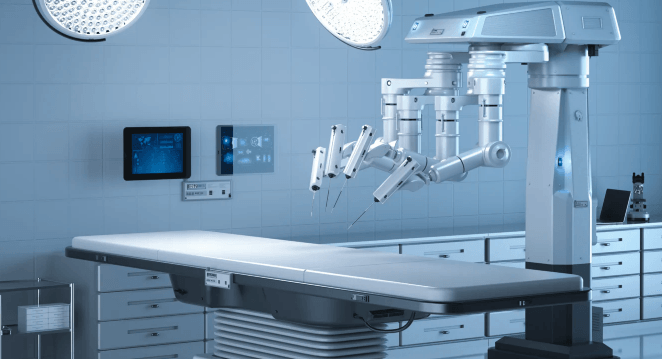
Robotics are transforming modern medicine by improving precision and reducing clinician fatigue. Across diagnostics, imaging, and rehabilitation, robotic platforms expand access to challenging regions and enhance data quality. Standards in training, ethical oversight, and interoperable systems are essential for safe adoption. Rigorous, reproducible studies must link engineering advances to patient outcomes, while post-market surveillance and equitable deployment sustain progress. The balance of innovation and regulation invites ongoing evaluation, inviting further investigation into where robotics best fit next.
Robotics bring measurable enhancements to modern medicine by augmenting precision, reducing human fatigue, and expanding procedural capabilities across disciplines. The analysis follows objective, cross-disciplinary data: teleoperation ethics informs governance, safety protocols, and consent frameworks; robotic training ensures standardized skill acquisition and continuous competency. Adoption hinges on transparent validation, interoperable systems, and rigorous, reproducible efficacy studies that align engineering with clinical outcomes.
Medical robotics extend diagnostic capabilities and imaging accuracy by enabling safer, more precise data acquisition, faster throughput, and enhanced access to challenging anatomical regions. Robotic platforms support standardized data collection, improving consistency across modalities. They augment image interpretation through motion stabilization, high-resolution sensing, and automated analysis pipelines. Interdisciplinary validation demonstrates reduced variability, enhanced reproducibility, and streamlined workflows without compromising patient safety or clinical judgment. Freedom-oriented, evidence-driven progress persists.
Real-world robotic-assisted surgery and rehabilitative technologies are delivering measurable gains in precision, safety, and functional outcomes.
Across procedures, teleoperation safety protocols reduce latency risks, while high-fidelity control enhances accuracy and repeatability.
Rehabilitation interfaces leverage tactile feedback to inform clinicians and patients, supporting adaptive recovery trajectories.
Interdisciplinary data show corroborated improvements in procedural consistency, patient engagement, and early functional milestones with scalable applicability.
Robust ethics governance structures, transparent regulatory pathways, and continuous post-market surveillance ensure patient safety while fostering innovation.
Equitable access hinges on adaptable deployment, affordability, and stakeholder collaboration, aligning technological capability with human rights, professional accountability, and sustainable, evidence-based practice.
See also: observateur
Cost effectiveness varies by condition and setting; long term outcomes often depend on device durability, access, and care pathways. Interdisciplinary analyses suggest modest to substantial gains in select chronic conditions, tempered by upfront costs and maintenance considerations.
“Like a lighthouse in a fog,” the robot’s emergent, non-surgical role shows clear emergency limitations and non-surgical constraints: it cannot replace human triage, kinesthetic judgment, or rapid device deployment, requiring clinician oversight, adaptability, and interdisciplinary validation.
Robots adapt to patient-specific anatomy through real-time imaging and adaptive planning, enabling precise tumor integration and nerve mapping. This precision-driven, interdisciplinary approach combines data from multiple modalities, supporting evidence-based decisions while preserving autonomy and freedom in treatment choices.
Current question: The training gaps include insufficient hands-on practice, limited interdisciplinary curricula, and variable credentialing; thus, robot training should emphasize standardized simulations, mentorship, and outcome tracking to ensure clinician proficiency across diverse systems and procedures.
Federated systems protect patient data with rigorous privacy controls and data encryption, ensuring breach resistance; clinicians should rely on multi-layer safeguards, audit trails, and interoperable standards, enabling freedom of choice while maintaining precision in robotic-assisted care.
Robotics in medicine stands as a quiet conductor, guiding precision through complex symphonies of care. Each instrument—diagnostic imaging, surgical microrefinement, rehabilitation—harmonizes with data-driven cadence, reducing fatigue and elevating outcomes. Ethical and regulatory silences become steady metronomes, ensuring patient safety while widening access to challenging terrains. Interdisciplinary threads—engineering, medicine, ethics—weave a dawn-lit tapestry where reproducible evidence and responsible deployment illuminate procedural consistency, early recovery, and human-centered progress, casting a resilient, instrumented future.