Newsletter Subscribe
Enter your email address below and subscribe to our newsletter
Enter your email address below and subscribe to our newsletter


 ByJohn A
Robotics in medical procedures offer tremor filtration, precise motion, and repeatable trajectories to support accuracy and safety. Across operating rooms, labs, and point-of-care settings, standardized workflows and sterility routines enable rapid validation and consistent results. Platform selection, interoperability, and cost must align with task-specific accuracy and ergonomic needs. Risk management, regulatory considerations, and scalable deployment determine feasibility. This framing sets the stage for careful evaluation of options and their impact on patient-centered outcomes, inviting continued examination of trade-offs and safeguards.
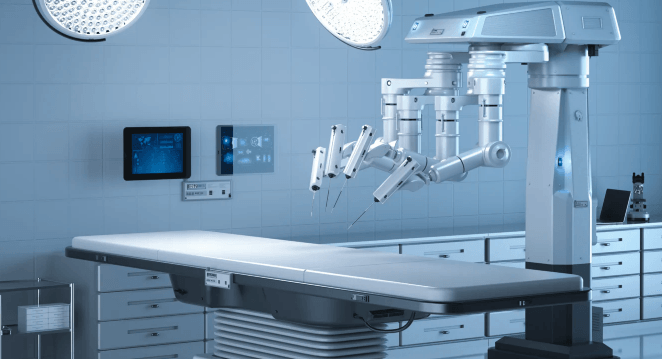
Robotics bring a measurable enhancement to modern medical procedures by enabling higher precision, steadier control, and scaled capabilities beyond human limits. This framework supports precision surgical tasks through meticulous motion planning, tremor filtration, and repeatable instrument trajectories.
Robotic automation reduces variability, elevates consistency, and reinforces safety protocols, empowering clinicians to perform delicate interventions with predictable outcomes and controlled, auditable workflows.
The clinic-wide deployment of robotic systems spans operating rooms, laboratories, and point-of-care settings, each with distinct requirements for accuracy, sterility, and workflow integration.
Robotic systems enable robots in sterilization routines, reinforce training paradigms, and support ORs and labs through standardized protocols.
Point of care devices demand rapid, safe, reliable performance, with rigorous validation, risk assessments, and continuous improvement across all settings.
Choosing the appropriate robotic approach requires a clear alignment of platform capabilities with clinical tasks, workflow integration, and total cost of ownership.
Systematic platform comparisons illuminate capabilities, precision, and ergonomics, guiding selection.
Safe integration hinges on compatible instruments, imaging, and control interfaces.
Cost considerations hinge on purchase, maintenance, and throughput gains, informing disciplined adoption for patient-centered outcomes and procedural efficiency.
The discussion emphasizes risk management, regulatory pathways, and platform interoperability to ensure robust deployment.
A rigorous cost benefit analysis accompanies feasibility reviews, defining thresholds for safety, efficacy, and scalability while preserving patient autonomy and system-wide freedom to advance innovative, accountable medical robotics.
See also: observateur
Robots adapt to patient-specific anatomy in real time through adaptive planning and soft tissue tracking, enabling precise instrument guidance while maintaining safety. This approach supports procedure-oriented workflows and preserves practitioner autonomy within a disciplined, risk-aware framework.
The training requires formal surgeon credentialing and structured simulation curricula, ensuring proficiency before clinical use; mastery emerges through meticulously tracked milestones, safety checks, and competency assessments, aligning precision-focused practice with responsible, autonomy-minded surgical advancement.
Emergency protocols guide robotized systems to execute predefined intraoperative autonomy safely, with surgeon oversight. In critical moments, autonomy is constrained by safeguards, prompting rapid escalation to human decision-makers when uncertain, ensuring patient stability and adherence to established protocols.
The patient experience involves sustained comfort and monitored sedation, with informed consent guiding expectations; procedures emphasize precision and safety, prioritizing comfort-enhancing measures. Durability of sedation supports stable intraoperative conditions, while autonomy-friendly explanations empower patients seeking freedom within care.
Robotic solutions for community hospitals are massively scalable, enabling scalable adoption through modular systems. A rigorous cost benefit analysis highlights upfront investments versus long-term efficiency, with safety procedures guiding implementation, training, and maintenance while preserving clinician autonomy and patient freedom.
Robotics in medical procedures closes the loop between intention and outcome with gloved precision. By translating tremor into steady cadence and choreographing instrument trajectories, these systems heighten safety while standardizing care. Across ORs, labs, and point-of-care settings, platforms must be chosen for reliability, interoperability, and cost-effectiveness. As risk management and regulation evolve, the field cultivates scalable, patient-centered therapies, like a meticulously tuned instrument—every note measured, every motion deliberate, guiding medicine toward improved futures.